

Families Find Stability at Brightpoint
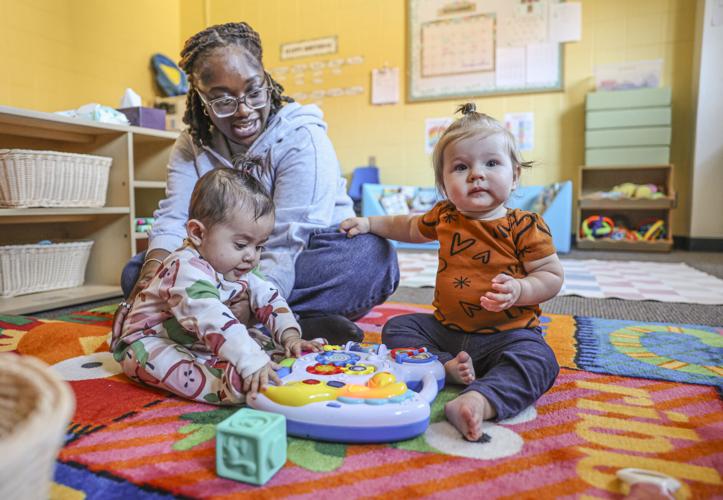
Family support specialist Maurai Wells works with Marleni Reyes-Lopez, left, and Emerson Kempen on Friday, Nov. 7, 2025, in a classroom at Brightpoint’s Scott Child & Family Center, 1119 East Taylor St., Bloomington. The organization serves dozens of local families, with much of its funding coming from the federal Head Start program.
Reposted from The Pantagraph
By D. Jack Alkire; Photos by Clay Jackson
BLOOMINGTON — Ciera Fancher sat in a conference room doubling as a diaper and baby-supply closet at Brightpoint’s Scott Child & Family Center. She’d been crying.
A single mother of four, Fancher was thinking about the care shown for her family within those walls, especially her 2-year-old twins and 3-year-old daughter. One twin has autism, and their previous day care “did not accommodate her,” she said.
After she followed a recommendation to switch to full-time at Brightpoint — a day care with certified early childhood teachers for ages 6 weeks to 5 years old — the difference was night and day.
“To know that they love her — she’s not a burden to them. … It’s like, not just day care. They’re like family. They love my kids, everybody here,” she said, dabbing tears from her eyes.
“Sometimes I sneak in when I come to get my kids, and I just watch them in the way they are with my kids. And it’s amazing,” Fancher said.
Families like hers depend on Brightpoint’s early childhood programs, many of which are funded through Head Start, the federal early education and family support initiative now facing fresh uncertainty because of a prolonged government shutdown.
Head Start serves hundreds of thousands of low-income families nationwide, offering early learning, home visits and meals, as well as medical and dental screenings. Across the country, some centers have already closed after federal funding was cut off by the shutdown, leaving parents scrambling.
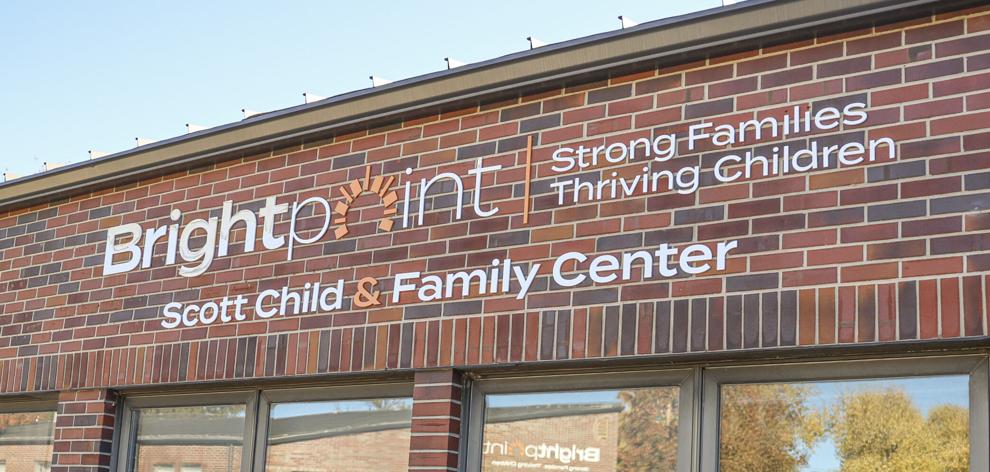
Brightpoint’s Scott Child & Family Center is shown at 1119 East Taylor St. in Bloomington.
So far, Brightpoint has not been directly affected by the shutdown, said Mike Shaver, the organization’s president and CEO. That’s because its grant cycle doesn’t renew until June, later than the programs currently missing their federal funds.
“We’re fine … for now,” Shaver said. He added that other programs across the country weren’t as fortunate when federal funds were frozen earlier this year, and that prolonged uncertainty could eventually affect Brightpoint as well.
Lifeline amid rising costs
Brightpoint, formerly Children’s Home and Aid, operates several early childhood centers across Illinois, including the Scott Child & Family Center in Bloomington. It serves 48 children in Early Head Start, 17 in Head Start and 20 in Preschool for All.
“We’re teaching through play,” said Mendy Smith, vice president of early childhood services for Brightpoint. “We’re teaching through transitions. We’re teaching through changing diapers, singing songs, getting them to love learning as an infant.”
The program serves children from low-income families who qualify for other benefit programs, as well as foster children and those experiencing homelessness.
For families, it offers a lifeline at a time of skyrocketing costs. A 2024 U.S. Department of Labor found that full-time infant care can cost families up to $19,000 a year.
Those expenses, coupled with rising costs for basics like food and housing, make accessible programs like Brightpoint essential for families like Fancher’s. “The cost of living is outrageous,” she said. Working remotely for a call center, she makes over $25 an hour and said she’s barely getting by.
“To have an opportunity like this for somebody like me, it’s honestly amazing,” she said of the services at Brightpoint. “It is honestly amazing.”
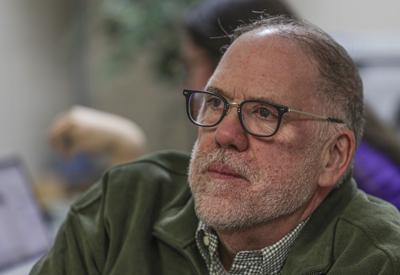
Michael Shaver
Brightpoint had a $95 million budget for its programs statewide in fiscal year 2024, with 83% from state and federal funding. Its central region, which includes Bloomington, has an annual budget of roughly $11.3 million.
“We run a blended and braided program here,” Shaver said, “meaning Head Start is covering some of our costs.” Also contributing are state programs, including Preschool For All and the Prevention Initiative for infants and toddlers.
Research has shown that providing early childhood and family services to low-income families and those facing poverty with federally funded programs like Head Start and Brightpoint actually saves taxpayer dollars in the long run, Shaver said.
“For every dollar you invest in high quality early childhood program, there are $7 in savings down the line,” he said.
A path to support
Child care is just one of the services provided by Brightpoint, said Khloe Koch, a single mother of two enrolled at Brightpoint. This past July, she also became a teacher.
Early Friday afternoon, she was sitting cross-legged on the floor of a classroom for young children when one of the four children, not even a year old, started to cry.
“It’s hard when they cry, especially. … They want connection. They want to be cared for. And I love that I am able to provide that because, I mean, some families here, they’re not able to do all of that with their kids all the time.”
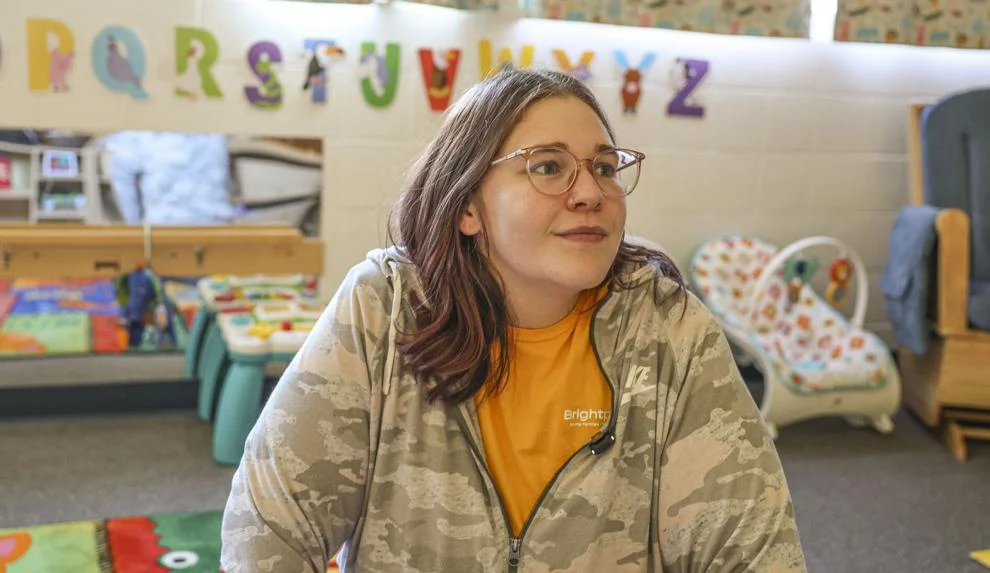
Khloe Koch, whose children receive care at Brightpoint in Bloomington, became certified in early childhood education and started teaching there earlier this year. “It’s very hard to find jobs that will work with you when you have kids, let alone child care,” she said.
Koch’s youngest is 16 months old.
“I started to utilize a lot of the resources (at Brightpoint), and I also lost my job when I was pregnant,” she said. “So, I was given a lot of advice on, like, finding new jobs, going back to school. That’s what they helped me a lot with.”
Koch enrolled in early childhood education courses, got certified and started working at Brightpoint, she said.
Finding new or better employment can be challenging without help from places like Brightpoint, Koch said. “It’s not possible for some people,” she said. “You know, like, I myself have two kids, and it’s very hard to find jobs that will work with you when you have kids, let alone find child care.”
Families with two incomes are also among those served by Brightpoint and other Head Start programs. For some, like Aye-V Hudson, the services make it possible to continue in the workforce.
“My availability for work is while my kids are here. So, if I didn’t have this, then I can’t go to work,” she said.
The support Brightpoint offers Hudson’s family is warm, she said. “I would describe it as a hug. … I felt like this place has really helped restore, you know, my point of view on humanity,” she said.
Like Koch and Fancher, Hudson grew emotional when asked what she would say to the folks who care for her children every day.
“I would say, ‘Thank you for helping me raise my kids,’ because that’s exactly what they’re doing,” she said. “It’s hard, you know, to give your kid to somebody else, but when you know that they can go there and be safe and trust the people around them, it’s such a good feeling.”
Ongoing concerns
While Brightpoint remains unaffected by the shutdown for now, many Head Start operators nationwide say the program has faced uncertainty in President Donald Trump’s second term. Not long after he took office, a website glitch locked Head Start programs around the country out of their funds, and some had to close.
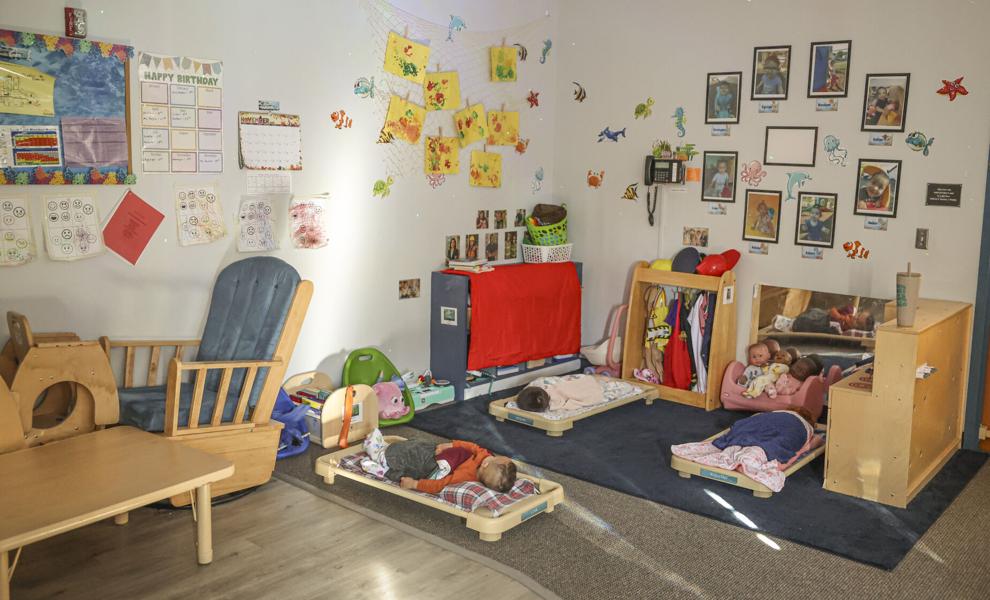
Naptime for sleepy babies is shown at Brightpoint’s Scott Child & Family Center.
“When they just put a freeze on everything (in January), when they just stopped all funding so they could study it, it led to a scramble,” Shaver said. Brightpoint was able to continue providing support because it had reserves available to continue program operations.
“That wasn’t true across the country,” he said.
Then, an early budget draft leaked in the spring zeroed out Head Start funding, although the administration later backtracked on that position.
Shaver said the budget reflected a plan outlined in Project 2025, a conservative policy agenda published by the Heritage Foundation in preparation for Trump’s second term. It called for sweeping and significant cuts to social programs like Head Start and the elimination of the Department of Education.
“Head Start was on the chopping block in Project 2025,” Shaver said. “There are conservative think tank folks, forever, who have had a position that ‘education,’ and I’m using air quotes, should be totally and wholly left up to the states.”
If funding for Head Start does disappear, many families like Fancher’s could face a choice between working and caring for their children. “As a mother, I would choose my kids,” she said.
But that choice puts employment prospects at risk for pretty much every family at Brightpoint across the state, Hudson said.
“That would put hundreds, if not thousands of families out of work,” she said.
The discussion around Head Start funding is an emotional one for Koch.
“If I didn’t have this program, me and my kids would not have been able to thrive like we could. And, so, to see it go away would be devastating. I don’t know where I would go. I don’t know where a lot of other people would go.
“It doesn’t take a lot to have a kind heart and to have compassion for others,” she said. “And that’s all kids need to grow up and be successful. Really.”
Illinois Prairie Community Foundation awarded a General Grant to Brightpoint for its Central Region Prevention Services program. If you would like to support youth programs like this, donate online. (https://ipcf.fcsuite.com/erp/donate/create/fund?funit_id=1034)